




No Events
The Shanghai Cooperation Organization (SCO) was established on June 15, 2001, with the aim of developing security, political dialogue, and multilateral cooperation across the Eurasian region. The founding members of the organization are the People’s Republic of China, the Russian Federation, Kazakhstan, Kyrgyzstan, Tajikistan, and Uzbekistan. Subsequently, with the admission of India, Pakistan, Iran, and Belarus, the number of SCO member states reached ten. Since its establishment, the SCO has operated within the framework of the principles of mutual trust, good-neighborly relations, and the development of cooperation among states. Over time, the organization’s areas of activity have expanded beyond security issues to include political relations, economy and trade, investment, energy, transportation, logistics, science and technology, the environment, culture, tourism, and humanitarian cooperation. The “Shanghai Spirit,” one of the SCO’s fundamental principles, encompasses mutual trust, mutual benefit, equality, consultation, respect for cultural diversity, and a shared understanding of development. The organization makes its decisions on the basis of consensus among its member states. The highest decision-making body of the SCO is the Council of Heads of State. Meetings of the Council of Heads of State are important for evaluating the organization’s activities, determining key areas of cooperation, and adopting joint documents on international and regional issues.
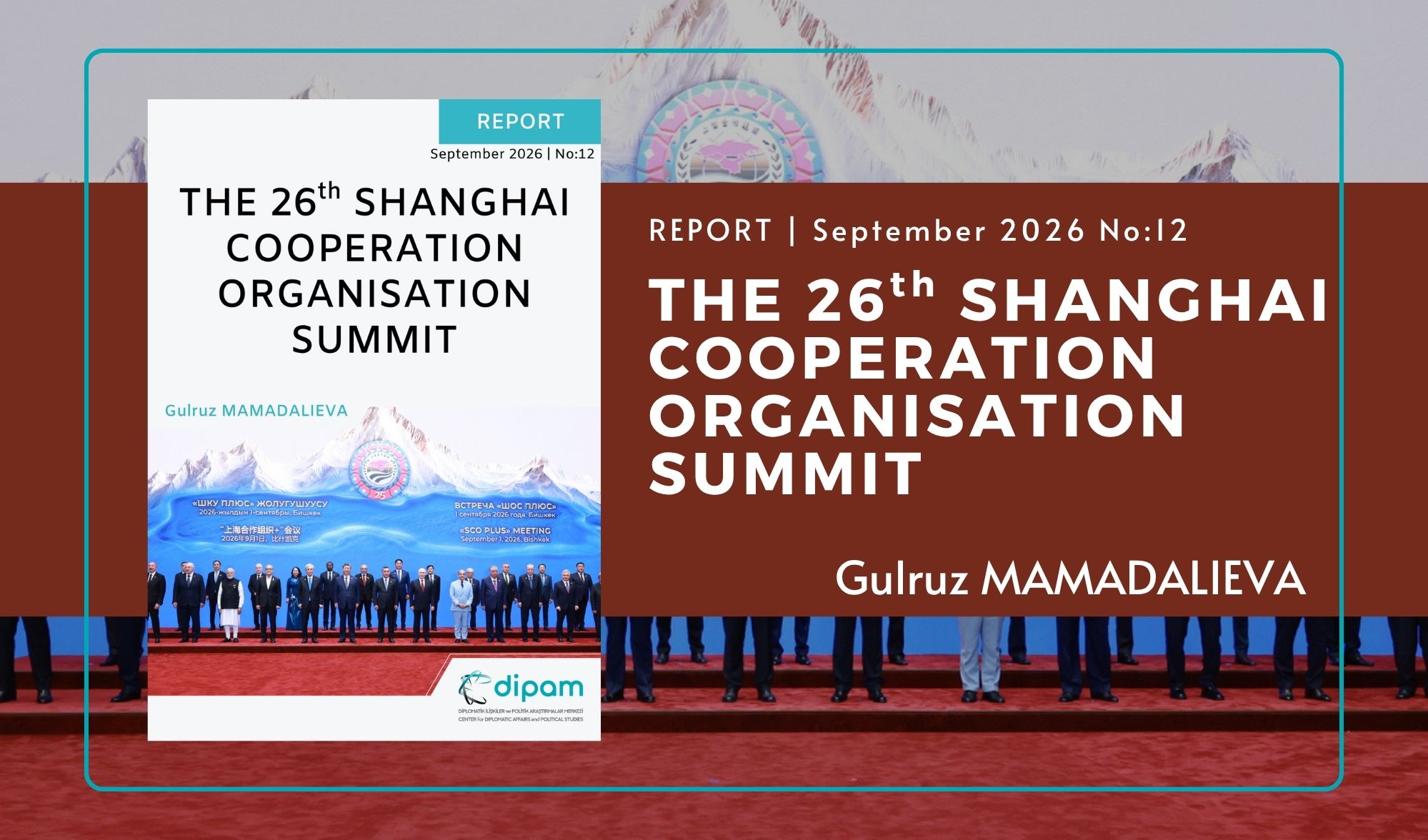
The 26th meeting of the SCO Council of Heads of State was held on September 1, 2026, at the Irys Ordo Congress Center in Bishkek, the capital of Kyrgyzstan. The meeting was chaired by Kyrgyz President Sadyr Japarov. The summit was one of the most important high-level meetings held as part of the 25th anniversary of the SCO’s establishment. Kyrgyzstan held the SCO chairmanship during the 2025-2026 period. Kyrgyzstan’s chairmanship was conducted under the theme “The SCO’s 25th Anniversary: Together for Sustainable Peace, Development, and Prosperity.” During the chairmanship, meetings and events were organized concerning the organization’s work in security, the economy, transportation, the environment, culture, and other sectoral areas. The Bishkek Summit marked the end of Kyrgyzstan’s chairmanship and the transfer of the 2026-2027 chairmanship to Pakistan. Pakistan announced the theme “Turning Vision into Action: Connectivity, Innovation, and Shared Prosperity” for its new chairmanship. While multilateral cooperation among the member states was discussed during the summit, an expanded session was also held afterward in the “SCO Plus” format. Thus, in addition to the member states, representatives of states and international organizations maintaining relations with the SCO under different statuses also participated in the meeting process.
This report examines, in an information-focused manner, the preparatory process for the 26th meeting of the SCO Council of Heads of State held in Bishkek, the summit’s agenda and participants, the leaders’ statements, the SCO Plus meeting, the documents adopted, the bilateral meetings held on the margins of the summit, and Türkiye’s activities at the summit.
Table of Contents
- 1- INTRODUCTION
- 2- PREPARATIONS FOR THE SUMMIT
- a. Kyrgyzstan’s Chairmanship
- b. Meetings of the Council of National Coordinators
- c. Foreign Ministers’ Meeting
- 3- THE 26TH MEETING OF THE SCO COUNCIL OF HEADS OF STATE
- a. Holding of the Meeting
- b. The Summit Agenda
- 4- LEADERS’ STATEMENTS AND ISSUES RAISED AT THE SUMMIT
- a. Kyrgyz President Sadyr Japarov
- b. Chinese President Xi Jinping
- c. Russian President Vladimir Putin
- d. Participation of Other Member States
- 5- ASSESSMENT BY THE SCO SECRETARY-GENERAL
- 6- THE “SCO PLUS” MEETING
- a. Expanded Format
- b. Agenda of the SCO Plus Meeting
- c. Chinese President Xi Jinping’s Speech at the SCO Plus Meeting
- 7- DOCUMENTS ADOPTED AT THE SUMMIT
- a. Bishkek Declaration
- b. Protocol on Amendments and Additions to the SCO Charter
- c. Universal Center for Countering Security Threats and Challenges
- d. SCO Anti-Drug Center
- e. International Information Security
- f. Biodiversity and the Environment
- g. Green Technology Corridor
- h. Ports and Logistics Centers
- i. Data Processing Centers and Artificial Intelligence
- j. SCO-African Union Cooperation
- k. Energy and Energy Efficiency
- l. Nuclear Security
- m. Cooperation on the Family Institution
- n. Assistance to States Affected by Emergencies
- o. Regulations on Combating Crime
- p. Tourism and Culture
- q. Other Institutional Documents
- 8- BILATERAL MEETINGS AND DIPLOMATIC CONTACTS ON THE MARGINS OF THE SUMMIT
- 9- TÜRKİYE’S RELATIONS WITH THE SCO
- 10- PRESIDENT RECEP TAYYIP ERDOĞAN’S VISIT TO BISHKEK
- a. The Visit
- b. Erdoğan’s Participation in the SCO Plus Meeting
- 11- TÜRKİYE’S BILATERAL MEETINGS ON THE MARGINS OF THE SUMMIT
- a. Erdoğan-Aliyev Meeting
- b. Erdoğan-Japarov Meeting
- c. Erdoğan-Putin Meeting
- 12- FRAMEWORK OF TÜRKİYE’S PARTICIPATION IN THE SUMMIT
- 13- TRANSFER OF THE CHAIRMANSHIP TO PAKISTAN
- 14- CONCLUSION