



No Events
For many years, Central Asia was one of those regions where international politics was largely interpreted through the lens of competition among other actors. Defined by Russia’s political and military influence, China’s economic clout, the United States’ (U.S.) periodic interest, and Europe’s energy needs, the region was often viewed as a point of intersection for the policies of major powers rather than as an actor capable of shaping its own strategic choices.
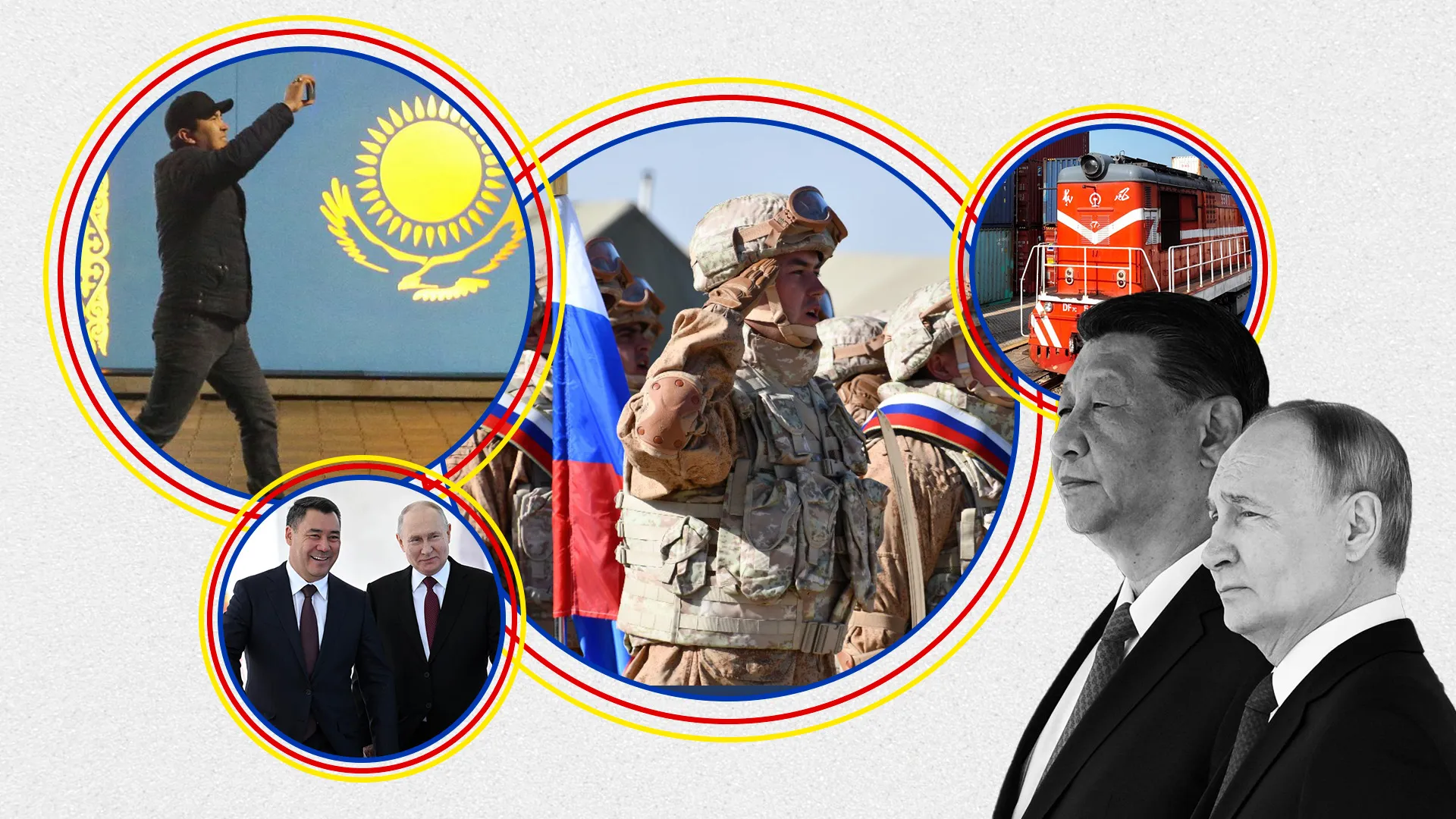
Today, however, this picture is changing. Kazakhstan, Uzbekistan, Kyrgyzstan, Tajikistan, and Turkmenistan are not only trying to carve out a space for themselves amid the competition between the great powers but are also expanding their regional scope of action by deepening cooperation among themselves. For this reason, it is no longer sufficient to view Central Asia merely as a geography “caught between Russia and China.”
Consequently, it is becoming increasingly difficult to explain the emerging new foreign policy paradigm in Central Asia using one-dimensional terms such as “distancing from Russia” or “moving closer to China.” The real change lies in the proliferation of options. The fundamental transformation in the region is not a shift from one axis to another, but the creation of multiple axes simultaneously. The most significant consequence of this situation is that the “multi-vector policy” approach—long employed in the foreign policies of Central Asian countries—has now evolved from being merely a diplomatic balancing tool into a regional strategy.
The equation is shifting beyond Moscow and Beijing
Security ties, economic links, energy infrastructure, labor mobility, and historical ties ensure that Russia maintains its influence in the region. Particularly for Kazakhstan and Kyrgyzstan, it would be quite difficult for their economic and security ties with Russia to disappear in the short term.
However, following the Russia-Ukraine war, Russia’s regional position has begun to be assessed in a different context. Moscow’s diversion of a significant portion of its military and economic resources toward the war has increased the need for countries in the region to develop alternative ties in certain areas. The issue here is not to exclude Russia, but to ensure that relations with Russia are not the only option.
The policy pursued by Central Asian countries is not one of “anti-Russia.” On the contrary, it involves a strategic diversification in which they maintain their relations with Russia while also strengthening ties with other actors. For this reason, the continuation of Moscow’s influence in the region and the growing foreign policy autonomy of Central Asian countries are not mutually exclusive processes.
China, meanwhile, has become one of Central Asia’s most important economic partners. Energy investments, infrastructure projects, trade, and the connections developed under the Belt and Road Initiative ensure that Beijing’s economic clout in the region remains strong.
However, the Central Asian countries’ relations with China are not one-dimensional either. While Beijing’s financing and investment capacity presents a significant opportunity, the countries in the region are careful to ensure that economic dependence does not turn into political dependence. The most concrete indication of this is the diversification of relations—including economic activities—with Europe, Turkey, the Gulf states, South Korea, Japan, India, and the United States, even as ties with China are strengthened.
Geography Is Once Again Becoming a Strategic Advantage
The fact that Central Asia consists of landlocked countries has historically been one of the region’s most significant economic and geopolitical vulnerabilities. Dependence on different trade routes has caused transportation infrastructure to be influenced by political relations.
Today, however, the countries in the region are striving to overcome this disadvantage by developing alternative connections. While connections with China to the east are strengthening, the route extending westward via the Caspian Sea to Azerbaijan and Turkey is gaining importance. The search for southern routes also continues.
In this context, the Middle Corridor is becoming not just a transportation project, but a strategic tool that broadens Central Asia’s foreign policy options. However, the true strategic value of the Middle Corridor lies not merely in providing an alternative to Russia, but primarily in reducing the Central Asian countries’ dependence on a single route.
A study published by the World Bank on September 28 projects that, with the necessary infrastructure investments and trade-facilitating reforms, trade volume along the Middle Corridor could more than triple by 2040, and that with more comprehensive reforms, this increase could reach fourfold. To achieve this, the study notes that at least $25 billion in investment in railways, ports, and logistics infrastructure will be needed by 2040.
These figures demonstrate that the Middle Corridor can no longer be viewed merely as a regional transportation project. If the necessary investments are planned, the corridor will gain increasing strategic importance in reshaping economic ties between Asia and Europe.
Energy, as much as transportation, is a key component of Central Asia’s multi-partnership strategy. The pursuit of route and market diversification by Turkmenistan, Kazakhstan, and Azerbaijan demonstrates that energy and transportation are, in fact, parts of the same geopolitical equation. Considering Russian supply and Chinese demand, energy relations foster new political ties based on mutual needs.
The Two Shores of the Caspian Are Drawing Closer
The development of relations between the Central Asian countries and Azerbaijan is leading to greater economic and political integration between the two shores of the Caspian Sea. Thus, Central Asia’s access to Europe is increasingly characterized not only by a physical route but also by institutional and political ties.
The role of the Organization of Turkic States (OTS) in this process also takes on significance here. The development of the Middle Corridor and the strengthening of connections among member countries occupy a prominent place on the organization’s transportation agenda. This demonstrates that relations between Azerbaijan, Turkey, and the Central Asian countries are not based solely on cultural and historical ties, but are beginning to take institutional form in concrete areas of interest such as transportation, trade, investment, and energy. In this way, the rise of the OTS creates value by enhancing the capacity of Central Asian countries to diversify their partnerships.
On the other hand, for the first time, the countries of the region are not only diversifying their relations with external actors but are also reorganizing their internal relations—from border issues to economic ties. This is one of the most significant developments that could alter Central Asia’s position within the international system.
For this reason, it is no coincidence that the summit bringing together the Central Asian countries and Azerbaijan on October 8 and the meeting of the Council of Heads of State of the Commonwealth of Independent States (CIS), to be held on October 9 in Avaza—a city on the Caspian coast of Turkmenistan—are taking place in quick succession. The first offers an important window into Central Asia’s capacity to open up to the western shores of the Caspian Sea—particularly through transportation, energy, and economic ties—while the second provides insight into the weight and promise of the existing institutional network in the region, with Russia at its center. Both meetings will provide clues as to what stage Central Asia has reached in its aspiration to become an actor that connects different centers of power and seeks to create its own strategic maneuvering space through these connections.
This article has been published by Anadolu Agency (in Turkish) on October 08, 2026.