



No Events
Russia’s invasion of Ukraine has shifted the focus of European security back to the continent itself. However, this same process has also brought back to the forefront a question that has been debated at a theoretical level for many years: Should Europe develop the strategic capacity to ensure its own security, or should the priority be to build a stronger European pillar within NATO?
Ahead of the NATO Summit to be held in Ankara, this question is one of the fundamental issues that will shape not only Europe’s future but also that of the transatlantic alliance. For the real problem facing Europe today is not Russia; it is the imbalance between security dependence and strategic responsibility.
The Evolution of the Debate on Strategic Autonomy
Strategic autonomy at the European level was first articulated in the Franco-British Saint-Malo Declaration dated December 4, 1998. The declaration emphasized that “in order to fully play its role on the international stage, […] the Union must possess the capacity to act autonomously, backed by a credible military force, the means to decide on its use, and the will to act in international crises,” thereby affirming the EU’s security domain for the first time. However, the term “strategic autonomy” was officially incorporated into the European Union’s lexicon following the conclusions reached by the Heads of State and Government at the European Council meeting held on December 19 and 20, 2013. In June 2016, the European Union’s global strategy explicitly stated the goal of “endowing the European Union with strategic autonomy.” This orientation was later reaffirmed in the EU Strategic Compass—a white paper on European defense adopted in 2022—through strategies aimed at “strengthening the EU’s strategic autonomy.”
The debate over Europe’s “strategic autonomy” has often been perceived as an attempt to establish an alternative European defense system to NATO. However, the fundamental purpose of the concept is not to break away from NATO, but for Europe to develop greater capacity and decision-making ability regarding its own security.
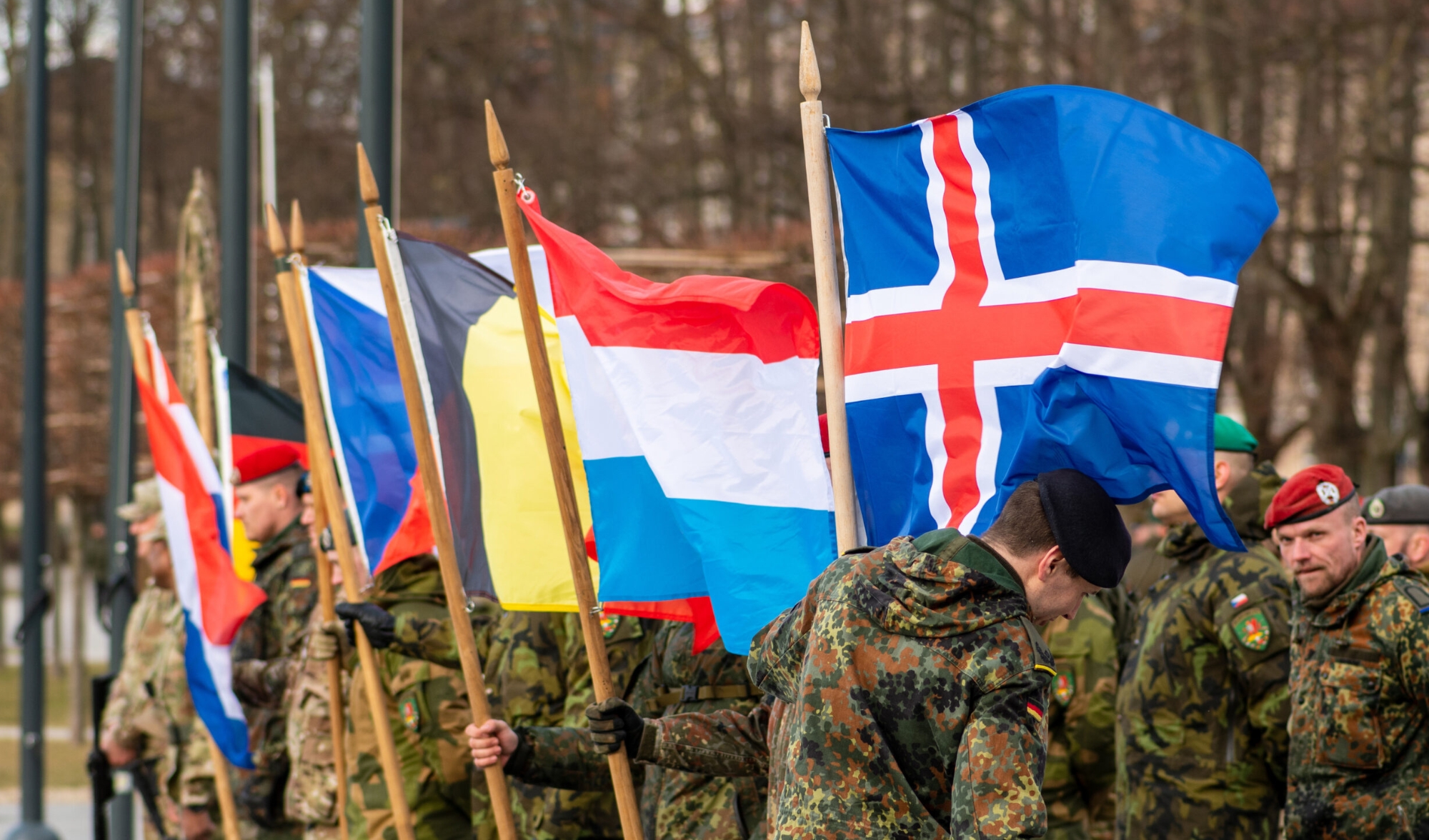
The key question at this point is whether we will witness a process of “NATO-ization,” in which the European Union becomes more deeply integrated into NATO’s strategic framework, or a process of “Europeanization,” in which NATO is reshaped in line with Europe’s security priorities.
France, the leading advocate for strategic autonomy within the EU-27, is known as the actor that introduced the concept. In a speech at the Sorbonne in September 2017, during the early days of his presidency, Emmanuel Macron emphasized the need to develop a “shared strategic culture.” At the time, this concept became a point of contention between Paris and Germany, which maintained a more Atlanticist stance. However, approximately six years after Macron’s remarks, Germany began to support strengthening Europe’s capabilities, provided that NATO’s central role remained intact. While some countries, such as Italy, have adopted a more cautious stance—due to political instability, economic priorities, and other factors—Eastern European countries continue to strongly maintain their reliance on American protection. In addition, relations between Spain and the U.S. have recently highlighted the potential for this fragmentation within NATO. The Pedro Sánchez government has reiterated its commitment to strengthening Europe’s contribution to collective defense, but has adopted a cautious stance toward certain U.S. demands regarding increased military spending.
However, there is a significant gap between Europe’s security reality and this political approach.
Today, European countries have increased their defense spending, developed joint ammunition production programs, and expanded cooperation in the defense industry. The first step in this development is the “Re-arming Europe by 2030” plan, known as the Security Action Plan for Europe (SAFE). Launched for the 2021–2027 period, the European Defense Fund has an unprecedented budget of approximately 8 billion euros, aimed at financing the research and development of shared military capabilities among member states. In addition, the European Peace Facility, established in 2021, finances the EU’s external military operations. Initially endowed with approximately 5 billion euros, the fund’s ceiling has risen to over 17 billion euros, largely due to the support provided to Ukraine.
Is NATO’s Europeanization Possible?
Nevertheless, the continent remains heavily dependent on U.S. strategic transport capabilities, intelligence networks, missile defense, nuclear deterrence, and advanced technology systems. Even Europe’s support for Ukraine has been sustained largely thanks to the strategic framework provided by the United States.
For this reason, it does not seem realistic for Europe to establish an independent security architecture capable of replacing NATO in the near future. Instead, the more likely scenario is that NATO will become increasingly Europeanized.
In fact, this is precisely the transformation that has been taking place over the past few years. As European countries have increased their defense spending, NATO has come to demand greater European leadership and responsibility. In particular, the view gaining traction in Washington is that Europe must shoulder a greater share of the costs associated with threats in its own region. The shift of U.S. strategic priorities toward the Indo-Pacific has further accelerated this trend. It is no coincidence that Europe’s rearmament programs and discussions on the division of labor within NATO are progressing in tandem. For example, the Norfolk Joint Force Command (JFC)—which had been led by American commanders since its inception—has been handed over to British command, the Naples JFC to Italian command, and the Brunssum JFC to joint German and Polish command. Recent studies also indicate that within NATO’s institutional framework, European strategic autonomy and NATO cooperation are no longer mutually exclusive but are increasingly becoming complementary processes.
Therefore, the main issue to be discussed at the Ankara Summit is not to what extent Europe will become independent from NATO, but to what extent NATO will become more European.
At this point, a stronger Europe—if designed correctly—will strengthen NATO. Historically, NATO’s biggest problem has not been Europe’s weakness, but rather the imbalance in burden-sharing that preceded it. A Europe that spends more on defense, possesses a more integrated defense industry, and has advanced crisis management capabilities would, in theory, reduce the burden on the United States while enhancing the alliance’s deterrence. The development of Europe’s strategic capabilities does not create an alternative to NATO; it enhances NATO’s sustainability.
However, for this to happen, Europe’s defense initiatives must be built on a logic that complements NATO rather than competing with other EU members or NATO itself. To achieve this, Europe’s strategy—and not just its defense policy but also secondary factors affecting this area—must be designed accordingly before any tactical steps are taken. Many areas—from industry to human resources, and from budgeting to foreign policy—must be aligned with a common defense policy. Furthermore, Europe will need to demonstrate its ability to overcome the EU’s institutional constraints in the interest of its defense. Strategic countries that are not EU members must be reassessed in this context.
Europe’s future security architecture cannot be discussed solely within the “EU and NATO” framework. The most significant contribution the Ankara Summit could make might be the redefinition of European security within a more inclusive framework. In this redefinition, cooperation with Turkey on European security is considered an indispensable factor. With its diplomatic success—a significant deterrent alongside its military capabilities—Turkey is viewed as an instructive and long-term partner capable of developing strategies for European defense. Thus, Turkey will also play a significant role in NATO’s future.
Turkey’s Rising Strategic Role
Strategic countries that are not members of the Union must be reassessed in this context. Europe’s future security architecture cannot be discussed solely within the “EU and NATO” framework. The most significant contribution the Ankara Summit could make is the redefinition of European security within a more inclusive framework. In this redefinition, cooperation with Turkey for European security is also considered an indispensable factor.
Turkey stands out as a partner capable of developing strategies for European defense, sharing its experience, and offering long-term cooperation, thanks not only to its military capabilities and capacity but also to its diplomatic successes, which serve as a significant deterrent. In this context, it is anticipated that the Ankara Summit—expected to be of historic importance in NATO’s transformation process—will lead the Alliance toward a new strategic approach in this direction. Ultimately, Europe’s future lies not in strategic autonomy but in strategic responsibility.
This article has been published by Anadolu Agency (in Turkish) on June 23, 2026.