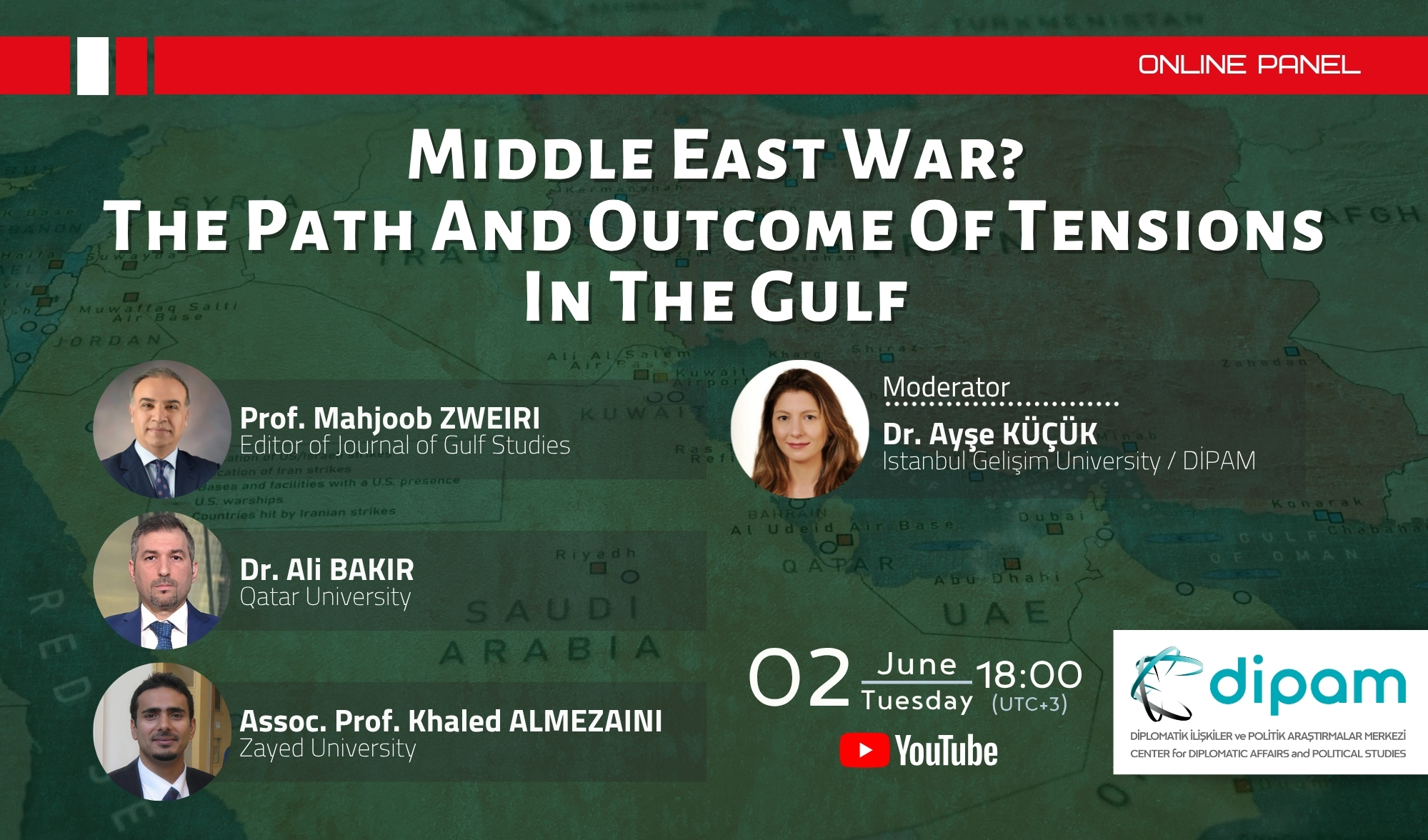
Middle East War? The Path and Outcome of Tensions in the Gulf
The U.S.-Iran tension, which escalated into direct military confrontation at the beginning of 2026, has evolved beyond a bilateral crisis into a large-scale regional and global security issue. The Gulf region, in particular, is exposed to the most immediate and multidimensional impacts of this conflict due to both its geographical location and its central role in the global energy system.
With the outbreak of the conflict, Iran’s attacks on energy infrastructure and military facilities in Gulf countries have clearly revealed the fragility of the regional security architecture. At the same time, risks to the Strait of Hormuz have threatened global energy supply security, leading to significant increases in oil prices. Indeed, the rise of oil prices above $100 and expectations of supply disruptions demonstrate that the war’s impact on the global economy is deepening.
In this context, Gulf countries have been striving to manage security risks while also attempting to maintain their economic stability. The downward revision of growth expectations for regional economies in 2026 and even the emergence of contraction risks are concrete indicators of the economic costs of the war.
This panel aims to address this multilayered process from a Gulf perspective and to analyze the transformation in the security, economic, and foreign policy preferences of regional countries.
Purpose of the Panel
The main objective of this panel is to evaluate the impacts of the U.S.-Iran war on Gulf countries from a multidimensional perspective and to discuss possible medium- and long-term scenarios alongside the current situation in the region.
The panel will particularly seek to answer the following questions:
- What are the effects of the war on the politics and societies of Gulf countries?
- What kind of strategic position are Gulf countries adopting in this conflict?
- How is the regional security architecture transforming?
- In what direction are the impacts on energy markets and economic structures evolving?
- What is the likelihood of the conflict turning into a regional war?
- What are the chances of success for diplomacy and mediation initiatives?
Panel Moderator
Dr. Ayşe KÜÇÜK
Member of Istanbul Gelişim University
DİPAM Specialist
Speakers
Prof. Mahjoob ZWEIRI
Scientific Editor of Iran, Encyclopedia Arabica. Arab Center for Research and Policy Studies
Visiting Professor, Doha Institute for Graduate Studies
Founder and Editor of Journal of Gulf Studies
Editor of Reimagining Social Sciences and Humanities in and from the Middle East
Dr. Ali BAKIR
Nonresident Senior Fellow, Scowcroft Middle East Security Initiative, Atlantic Council
Assistant Professor, Ibn Khaldon Center for Humanities & Social Sciences, Qatar University
Assoc. Prof. Khaled ALMEZAINI
Associate Dean, College of Humanities and Social Sciences, Zayed University


Comments are closed.