

No Events
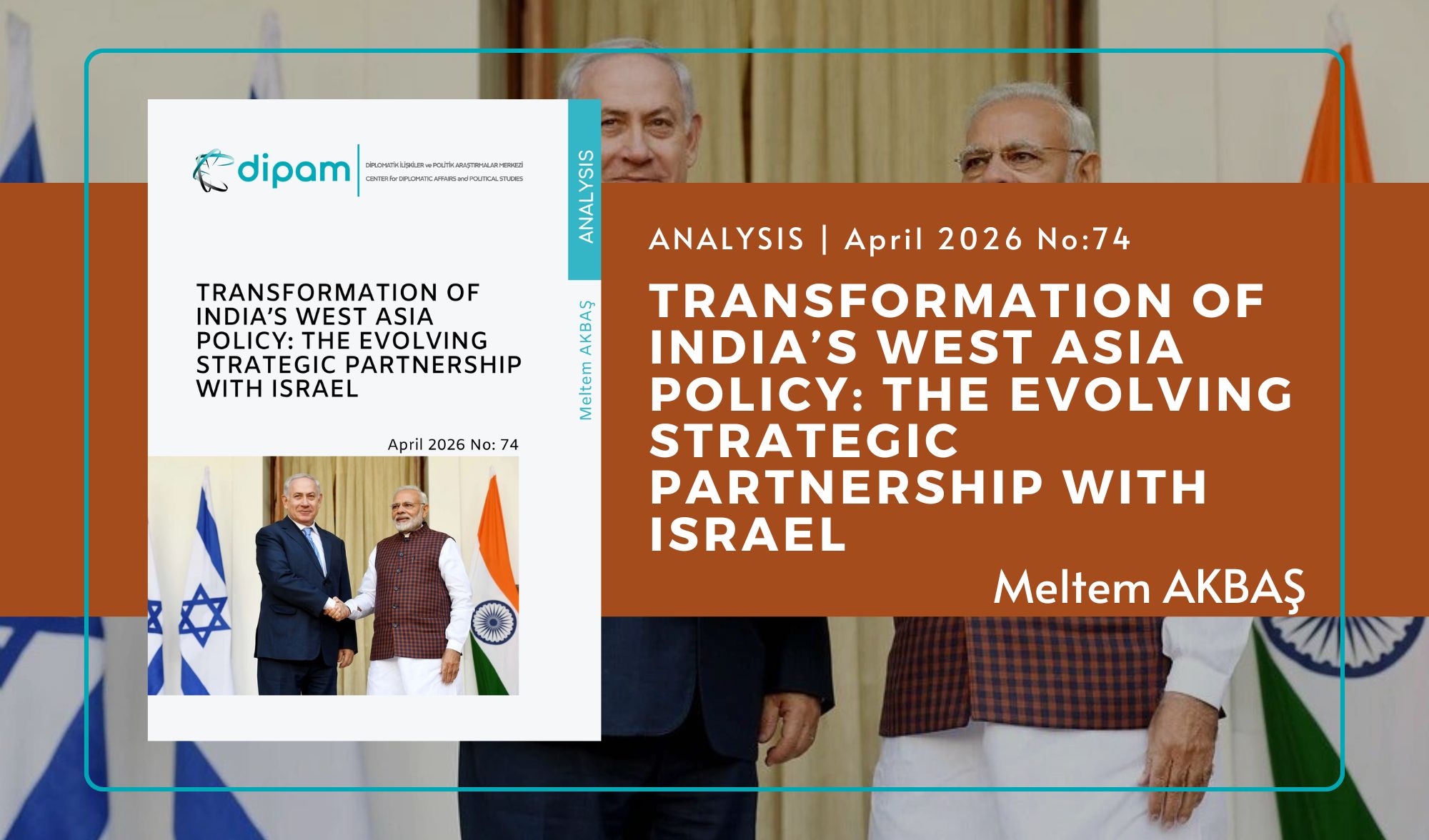
Changes in the international system and increasing security concerns directly influence the foreign policy orientations of states. This study examines India’s West Asia policy and the political transformation it has undergone, particularly concerning Israel during the Narendra Modi era. Known in its traditional foreign policy for providing diplomatic support to the Palestinian cause and conducting energy diplomacy with Iran, the New Delhi administration has experienced a significant shift in this balance in recent years. Today, India is establishing a much more integrated partnership with Israel in the fields of defense, intelligence, and high technology. Beyond the procurement of advanced missile defense systems and unmanned aerial vehicles from Israel, joint projects in areas such as artificial intelligence and cybersecurity demonstrate that bilateral relations have evolved from a purely commercial nature into a comprehensive security partnership. Accordingly, this study aims to understand the role of other regional and global actors influential in the deepening relationship between India and Israel and to analyze how these geopolitical steps serve India’s national interests. Within this framework, the primary research question of the study is: What are the fundamental factors shaping India’s Israel policy during the Narendra Modi era?
Historical Background
Following its independence in 1947, India’s foreign policy was shaped for many years by an anti-colonial stance and its leadership mission within the Non-Aligned Movement, which sought to maintain distance from Cold War power blocs. During this period, the New Delhi administration kept a visible distance from Israel to preserve its relations with the Arab and Islamic world and to account for the sensitivities of its large domestic Muslim population (Srivastava, 1970). Although India recognized Israel as a state in the 1950s, the inability to establish formal diplomatic relations was a clear reflection of this ideological reality. However, the end of the Cold War and the dissolution of the Soviet Union in the early 1990s drove a radical transformation in India’s foreign policy. The disappearance of the Soviet umbrella, combined with internal economic crises and the rise of the United States as the sole superpower, caused ideological dogmas to give way to realpolitik necessities. As a reflection of India’s strategy to adapt to these shifting global dynamics, full diplomatic relations at the embassy level were established with Israel in 1992, following decades of diplomatic distance. According to Rubinoff (1995), while an earlier rapprochement might have damaged India’s reputation, its cautious progress at a time when Israel was also improving ties with Eastern European countries and China made this transition more acceptable. In the pre-Narendra Modi era, although bilateral relations grew stronger over time, they were generally conducted “behind closed doors” in less conspicuous areas such as intelligence sharing and defense procurement to avoid drawing public or international backlash (Singh, 2022).
The Modi Era
The ascent of Narendra Modi to power in 2014 marked a definitive shift in India-Israel relations. The most critical doctrinal step of this period has been the “De-hyphenation” policy, which allowed India to treat the Israeli and Palestinian issues as two independent tracks rather than linking them directly as it had historically (Sharma, 2021). Through this strategy, New Delhi continues its official diplomatic support for the Palestinian cause—such as emphasizing a two-state solution—while simultaneously deepening its relationship with Israel by removing it from the mortgage of the Palestinian conflict.
In the foreign policy vision of the Modi era, Israel has been coded as a strategic partner where personal diplomacy also comes into play. Modi, who holds the distinction of being the first Indian Prime Minister to address the Israeli parliament, the Knesset, does not base his Israel policy solely on geopolitical pragmatism. Behind this strategic rapprochement lies a historical and discursive alignment between Zionism and the Hindu nationalist (Hindutva) line of the Modi-led Bharatiya Janata Party (BJP). Both states construct a shared threat perception by defining themselves as “democracies under existential threat, surrounded by Islamic radicalism and terrorism” (Irrum & Humza, 2025). Indeed, this shared security concern was articulated in Modi’s speech at the Knesset: “Terrorism, wherever it is, threatens peace everywhere” (The Hindu, 2026).
This evolving alliance has led to clear changes in India’s foreign policy reflexes during moments of regional crisis. Following the events of October 7, India’s support for Israel reflected a clear choice of axis; Modi announced to the international community that his country stood “resolutely” alongside Israel (Dawn, 2026). New Delhi’s messages of unconditional solidarity with Israel in the post-October 7 process demonstrate that India is breaking away from its historical ‘non-alignment’ reflexes and making a distinct choice of camp.
The Modi government has not limited this geopolitical rapprochement solely to a security axis but has expanded it through civil, economic, and sociological tools. The level of trust reached in bilateral relations is reinforced by the leaders’ emphasis on a “lasting friendship built on trust, innovation, and shared determination.” In this context, relations are also moving toward a dimension of geo-economic integration with the commencement of Free Trade Agreement negotiations (The Hindu, 2026). Alongside economic integration, Modi actively utilizes the diaspora as a soft power element, viewing the Indian-origin Jewish community in Israel as a cultural and sociological bridge between the two nations (The Hindu, 2026).
…