

No Events
The concept of global energy security has been regarded as one of the most important issues in international relations, particularly since the 1973 Oil Crisis. In this context, European countries and the United States faced a major embargo following the Yom Kippur War, which generated severe and long-lasting effects on the global economy and led to a systemic crisis. Although states within the international system attempt to prepare for such crises, disruptions tend to recur over time due to the heavy dependence of energy supply on specific geographical regions. The activities of the Houthis in the Red Sea since 2023 serve as a clear example of this pattern.
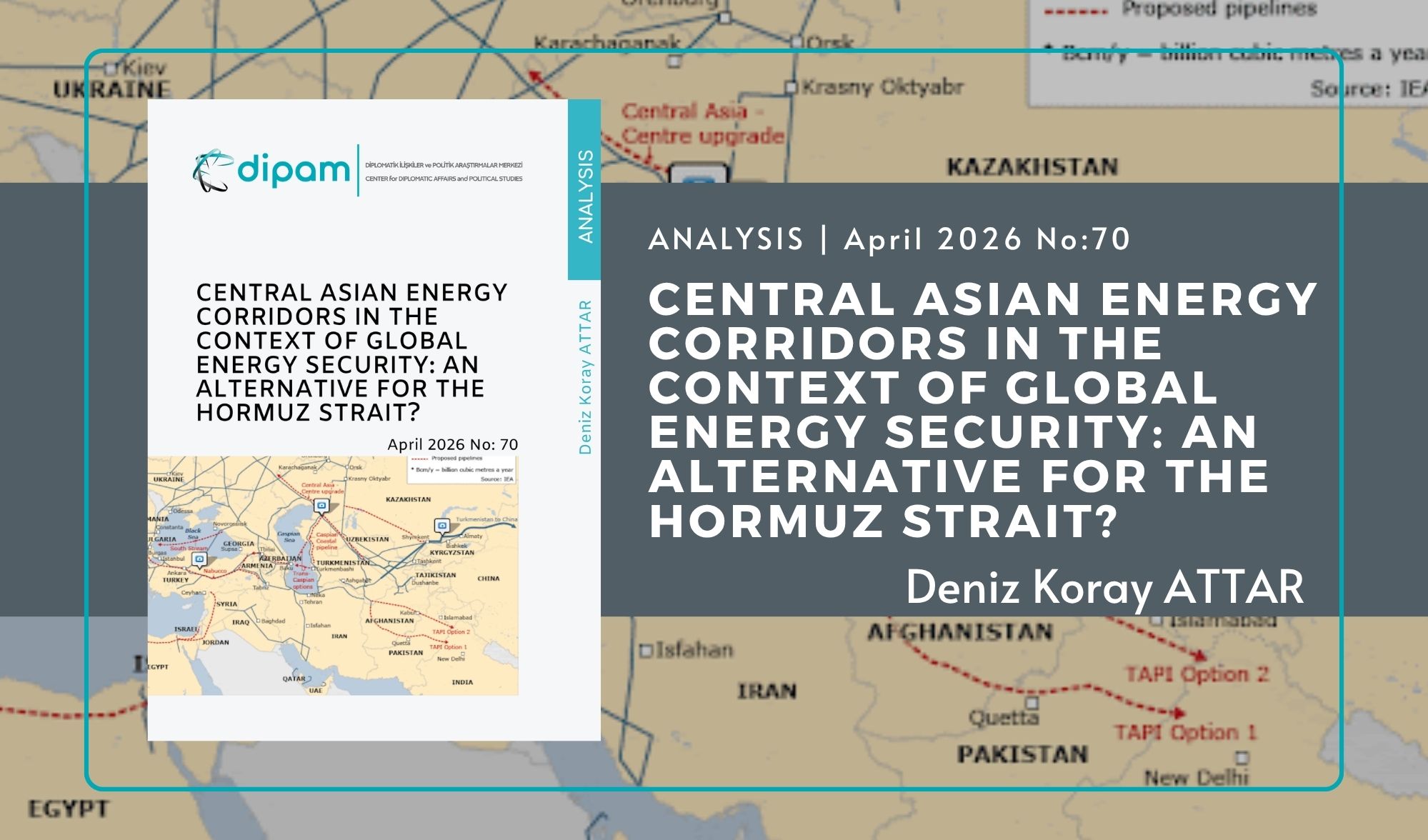
In this context, the ongoing US/Israel–Iran conflict since 28 February has also posed a major threat to global energy security. The effective disruption of the Strait of Hormuz, which accounts for approximately 20% of global oil trade despite remaining officially open, has created significant challenges for global energy supply. In this regard, oil price increases of up to 50% since the onset of the conflict have contributed to the global diffusion of its economic impact. Although many countries have attempted to implement measures to ensure the reopening and stability of the Strait, the uncertainty generated by the war has intensified discussions within international relations circles regarding alternative energy routes to the Strait of Hormuz. Within this framework, the rich energy resources and transport corridors of Central Asia, coupled with their relatively more politically stable structure compared to other key routes such as the Strait of Hormuz and the Red Sea, significantly enhance the strategic importance of these corridors. In particular, countries most affected by the crisis, such as China, Japan, and South Korea, have begun to develop closer relations with Central Asian states in order to secure short-term energy supplies. Considering the uncertainty generated by the conflict and its impact on global energy markets, Central Asia can be regarded as a strategic complementary region contributing to the diversification of global energy supply.
This study aims to establish a theoretical framework for the concept of global energy security by drawing on the Neo-classical energy geopolitics approach and prominent strands in the relevant literature, while also examining Central Asia’s energy potential and regional energy corridors. Finally, it provides a critical analysis of the extent to which energy corridors involving Central Asian states may serve as a strategic alternative in the context of the Strait of Hormuz crisis.
Global Energy Security
This section aims to establish a theoretical framework for the concept of global energy security by drawing on the Neo-classical energy geopolitics approach and the perspectives presented by Kuzemko et al. (2024) in Rethinking Energy Geopolitics: Towards a Geopolitical Economy of Global Energy Transformation. Understanding the concept of global energy security is of critical importance for analysing the Strait of Hormuz crisis and for assessing the strategic significance of Central Asian energy corridors.
The Neo-classical energy geopolitics approach explains energy security through the geographical distribution of energy resources, strategic transit routes, and interstate power competition. According to this approach, states are in a continuous state of competition over energy resources. In this context, states employ both soft and hard power instruments in order to ensure the security of energy corridors and energy supply. While states conclude various agreements concerning pipeline infrastructure, they may also deploy military forces for these purposes. Moreover, Neo-classical energy geopolitics places significant emphasis on critical energy corridors such as the Strait of Hormuz. The approach effectively accounts for the presence of the US Navy in the region, tanker route protection strategies, and Gulf security frameworks. However, Kuzemko et al. critically evaluate the Neo-classical energy geopolitics approach in their study Rethinking Energy Geopolitics: Towards a Geopolitical Economy of Global Energy Transformation, raising several concerns regarding its analytical limitations.
In the study in question, the authors argue that energy security is not limited solely to oil and natural gas, emphasizing that it is undergoing a dynamic transformation process. Therefore, although the closure of the Strait of Hormuz poses a significant risk to energy security, it also increases the importance of alternative energy sources and new energy routes.
…